
Scroll


Our intake specialist will be reaching out shortly to begin the process of finding the right therapist for you.
You’ve taken the first step towards improving your mental health. One of the most important factors in a successful therapy experience is finding the right therapist. At Self Space, we try to match each client with the perfect therapist. Our tried and true matching process takes your needs and our therapists' personalities and expertise into account to help you find the best fit.
We started Self Space with one simple goal in mind: to provide a trusted place for people to find healing. We are excited for you as you take this meaningful step to make space for yourself.
Our Latest Blog Posts
Blog
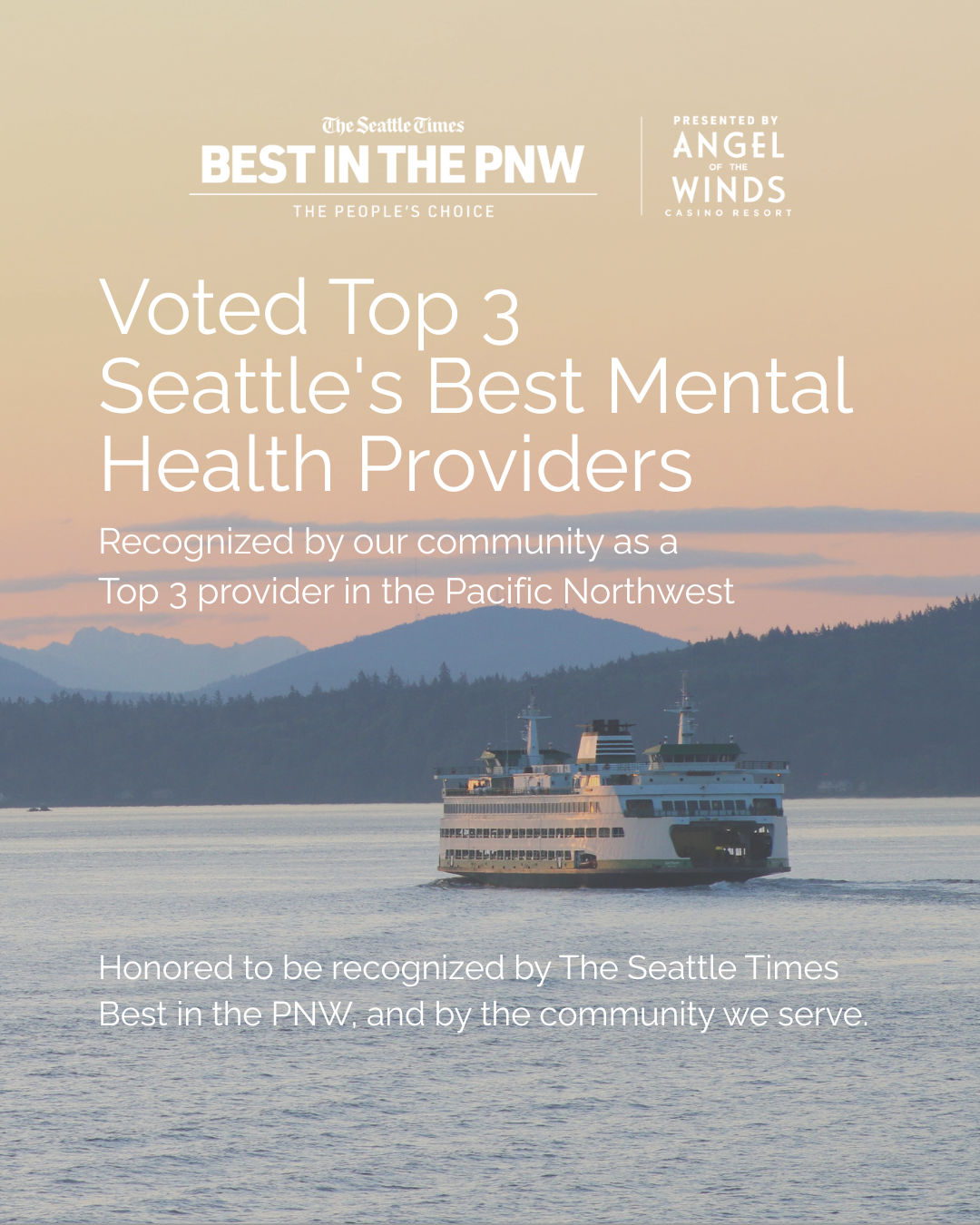
We are thrilled and honored to announce that Self Space has been awarded Bronze for Best Mental Health Services in The Seattle Times’ Best in the PNW 2026 awards!

For much of my life, I followed a path that seemed familiar. As a first-generation South Asian American growing up on the East Coast, I understood the expectations that often come with that experience. There is a strong emphasis on hard work, achievement, and building a stable future. For a long time, I believed that success meant continuing along the corporate path that had been laid out in front of me….

There's a reason fall feels like a fresh start, even though the calendar says the new year is months away.
Think about it. New school supplies. New schedules. That first morning cold enough for a sweater. Something in us perks up. For a lot of people, September, not January, is when life actually feels like it's starting over.

Tychelle Graham-Moskowitz, Self Space therapist, helps explore what therapists want more people to understand about death in this HuffPost article.

I thought I was going to become a guidance counselor. When I was in high school, that was the plan.
I went on to study psychology as an undergraduate, and even though I did not have many people in my life who had gone to graduate or who could help me navigate that path, I moved forward. I applied to programs all over the country. Arizona State, Minnesota, Washington. Seattle felt the most aligned with the kind of life I wanted, so when I discovered they did not have a guidance counseling program, I enrolled in school psychology instead.

When I think about what therapy means to me, it’s really about transparency, bringing light to the parts of our lives that feel too heavy or hidden. I once heard another therapist say, “My job isn’t to fix people; it’s to understand them.” That idea has stayed with me…

Every therapist sitting across from a client today was shaped by the training they received early in their career. The supervision they got (or frankly, didn't get!) The environment of their training either encouraged them to slow down and stay present, or pushed them move fast, check symptom boxes, and get through a high volume of clients quickly.

Starting therapy can feel surprisingly vulnerable. Even people who are excited for support often wonder: What am I supposed to say? Do I need to prepare? What if it feels awkward?

If you’re searching for a therapist in Seattle or Kirkland, it’s important to know that you do not need to have everything figured out before your first session. You don’t need the “perfect” words, a clear diagnosis, or a complete understanding of what’s wrong. Your first therapy session is simply a place to begin.

I grew up in church. My first career was in ministry, working in a nonprofit and serving people who were trying to make sense of life. In many ways, it made sense for who I was…But eventually, it stopped working for me. What I realized through all of it was that I loved being with people when they were slowing down, when they were honest, when they were searching. That’s what led me to therapy. It felt like the natural next step…

As AI enters the therapy space - through chatbots, mental health apps, self-help algorithms, and endless streams of psychological content - I find myself thinking often about what therapy actually is. Not the idea of therapy. Not the language of therapy. But the lived experience of it.

In this article from HuffPost, our very own Hannah Scheuer joins other leading therapists to discuss why well-intentioned "accommodation"—the habit of rescuing children from stressful or anxious situations—can actually fuel long-term anxiety in kids.

When it comes to politics and existential dread these days - many of us have a lot of questions.
If I disengage, am I giving up?
If I stay engaged, will I burn out?
What does it mean to care in a sustainable way?
There isn’t a simple answer - but there is a more compassionate way to hold the question.

Many families search for family therapy in Seattle because communication at home feels tense, repetitive, or exhausting. The same arguments keep happening. Someone shuts down, someone else raises their voice, and everyone leaves the conversation feeling misunderstood.
The good news is that meaningful change in families often starts with small shifts in communication. In family counseling, therapists often focus less on solving every problem and more on helping families talk to each other in ways that create understanding rather than escalation. We want to explore the way families are relating, not just solve for one particular conflict.

For much of my adult life, I believed that my worth was defined by how much I achieved.
Growing up, I learned to perform. I was the only daughter and the middle child in a family of five. My parents provided many opportunities, and in many ways, I felt supported. My mother was loving and kind, but her presence could feel inconsistent, and what worked for my brothers did not always work for me. I began swimming competitively at a young age, and the pool became an important space, one where I could explore a different part of myself and thrive within the structure and competition.
But over time, I began to feel a quiet disconnection from myself…

Let’s be honest: starting therapy can feel a little like a first date… with your entire inner world on the table. You’re sharing personal things with someone you just met, hoping they “get you,” and quietly wondering, Is this worth it? Should I come back?

Families go through seasons of closeness and seasons of tension. Disagreements, miscommunication, and stress are part of normal family life. But sometimes patterns of conflict, distance, or overwhelm start to feel stuck. When that happens, family therapy can help families reconnect and find healthier ways of relating.
If you’re searching for family therapy in Seattle or Kirkland, or wondering whether family counseling might help your family, you’re not alone. Many families reach a point where outside support creates the space for meaningful change.

At Self Space, we believe that no one should have to navigate their darkest moments alone. Recently, our very own Gabe Solseng was featured in a moving HuffPost article discussing the power of community and connection in suicide prevention.

The tension between strength and vulnerability has been a big part of my journey, both personally and professionally. In many ways, working in mental health has been my way of pushing back against some of the unhealthy masculine attitudes that were common where I grew up…

There is a particular kind of loneliness that comes from loving someone who is hurting themselves. It doesn’t always look dramatic. Sometimes it looks like an extra drink at dinner. A promise to cut back that never quite sticks. A partner who feels present one minute and gone the next.

There’s nothing weak about being vulnerable. The truth is, it takes tremendous courage to soften when every instinct tells you to armor up.
When I talk about masculinity, this is what I mean. We’re told that to be a man is to push through pain, to hold the line, to be the protector. But what strikes me as far braver is the willingness to crack that shell, to let the world see you as you are, and to accept yourself even when it feels risky.

Long ago, our survival depended on noticing danger quickly. The brain learned to treat negative experiences as more important, more memorable, more worthy of attention.

The COVID-19 pandemic created a rapid and lasting shift in how therapy is delivered, with telehealth moving from a necessity to a viable long-term option. One of the biggest questions for trauma therapists was whether EMDR could be delivered effectively and ethically through a screen.

Work stress is something that brings many folks to therapy, but lately we’ve noticed an uptick in anxiety around work here in Seattle and Kirkland.

This Coping Behavior Is Super Common Right Now - And It Says So Much About Where We Are As A Country
Dissociation - the brain’s way of mentally “checking out” during extreme stress - can either serve as a protective mechanism or become a chronic challenge. Learn more in Kayla Ritchie’s Huffington Post article.

Pull up a chair and enjoy our new series Shared Space: Stories from our Therapists. This series is an invitation to get to know the people who may sit with you in hard moments. You’ll find candid conversations, personal stories, and reflections on how each therapist approaches connection and healing. No clinical jargon, just real stories to help you get a feel for each therapist’s voice, values, and vibe before you ever book a session or make a recommendation. Enjoy!

In Dialectical Behavioral Therapy (DBT), many of the concepts and skills focus on increasing our ability to think flexibly and find balance. One area that I often explore with clients is their ability to balance maintaining the relationships in their lives with maintaining their own self-respect.

Stress is a large part of the human experience. But sometimes, it doesn’t even seem possible to manage our stress. It’s too big, too uncertain, too quick moving, and too mind-boggling to even begin to sort out. This feeling might actually be overwhelm and not stress, but distinguishing these two emotions can be tricky.
Meet Our Therapists
Therapists

Anxiety, Depression, Multicultural Identities, Relationships, Low Cost Therapy, Adolescents, Couples, Family Therapy
Anxiety, Depression, Multicultural Identities, Relationships, Low Cost Therapy, Adolescents, Couples, Family Therapy
My approach is grounded in authentic curiosity, transparency, and mindfulness. I'm heavily influenced by somatic, relational, and meaning-centered therapies - which means we pay attention not just to what you're thinking, but to what you're carrying in your body, your relationships, and your sense of purpose. I believe therapy provides a window into the soul and the human experiences we carry.

Anxiety, Grief/Loss, Trauma, Depression, Multicultural Identities, Relationships, Low Cost Therapy, Work/Life Issues, Couples, Career Burnout
Anxiety, Grief/Loss, Trauma, Depression, Multicultural Identities, Relationships, Low Cost Therapy, Work/Life Issues, Couples, Career Burnout
Elise is a counseling intern currently completing her Master’s degree in Clinical Mental Health Counseling at Seattle University. As a Korean immigrant who has lived between cultures, Elise brings warmth and cultural sensitivity to her work with clients navigating burnout, life transitions, grief, and identity questions.

Anxiety, Depression, Grief/Loss, Life Transitions, Low Cost Therapy, Relationships, Adolescents, Anger, Chronic Pain/Illness, Couples
Anxiety, Depression, Grief/Loss, Life Transitions, Low Cost Therapy, Relationships, Adolescents, Anger, Chronic Pain/Illness, Couples
Louis works with adults who are navigating anxiety, depression, stuckness, or just feel like something is missing. He is particularly interested in exploring questions of belonging, meaning, and authenticity.

Anger, Anxiety, Depression, Life Transitions, Trauma, Eating Disorders, Grief/Loss, LGBTQ+, Multicultural Identities, Parenting, Relationships, Sexual Issues, Neurodiversity, Queer Therapist
Anger, Anxiety, Depression, Life Transitions, Trauma, Eating Disorders, Grief/Loss, LGBTQ+, Multicultural Identities, Parenting, Relationships, Sexual Issues, Neurodiversity, Queer Therapist
Sam works with adults—especially men and LGBTQ people—dealing with shame, anger, relationship issues, perfectionism, compulsion. He focuses on helping clients understand and accept themselves, while fostering deeper connections with others

Anxiety, Depression, Life Transitions, Grief/Loss, Relationships, Adolescents, Parenting, Sexual Issues, Couples, Perinatal Mental Health, Trauma, Family Therapy, Chronic Pain/Illness, Infertility, Work/Life Issues
Anxiety, Depression, Life Transitions, Grief/Loss, Relationships, Adolescents, Parenting, Sexual Issues, Couples, Perinatal Mental Health, Trauma, Family Therapy, Chronic Pain/Illness, Infertility, Work/Life Issues
Kathy works with individuals and couples to navigate life transitions, cope with anxiety, depression, grief and loss, and explore issues around faith and spirituality. She specializes in working with people living with chronic health conditions and parents coping with a child’s diagnosis of a developmental difference. Kathy loves helping clients increase self awareness and make meaning in their life.

Relationships, Multicultural Identities, Couples, Anxiety, Grief/Loss, Life Transitions, Sexual Issues, Trauma, Kids, Adolescents, Parenting
Relationships, Multicultural Identities, Couples, Anxiety, Grief/Loss, Life Transitions, Sexual Issues, Trauma, Kids, Adolescents, Parenting
Mark helps couples and individuals communicate effectively and become better connected to themselves and their romantic partner(s). He has a passion for working with multiracial couples and men of color. He has a particular interest in challenges associated with identity and worldview, life transitions, and self-esteem/confidence.

Couples, Grief/Loss, Life Transitions, Parenting, Perinatal Mental Health, Trauma, Work/Life Issues, Relationships, Anxiety, Infertility, Career Burnout
Couples, Grief/Loss, Life Transitions, Parenting, Perinatal Mental Health, Trauma, Work/Life Issues, Relationships, Anxiety, Infertility, Career Burnout
Lauren views her clients as resilient, unique individuals who can simultaneously honor and shift their life experiences. Lauren works with individuals and couples experiencing anxiety, depression, grief, loss, infertility, postpartum challenges, career and life transitions, and a desire for change in their life.

Anxiety, Depression, Multicultural Identities, Relationships, Low Cost Therapy, Work/Life Issues, Career Burnout
Anxiety, Depression, Multicultural Identities, Relationships, Low Cost Therapy, Work/Life Issues, Career Burnout
Brian supports individual adults who find themselves wondering who they are outside of their productivity or performance. He specializes in treating career exhaustion, anxiety, depression, and the intersecting pressures of parenting and living multiculturally. Through a collaborative lens, Brian helps clients slow down, clarify what actually matters to them, and take steps toward meaningful, sustainable change.

Therapy here is a relational, judgment-free space where all of it can surface: the anxiety, the grief, the pressure you put on yourself, the moments you're not proud of. Together we'll work on new ways of approaching life and relationships, building the kind of self-understanding that doesn't just reduce distress now but bears fruit for years to come: more ease within yourself, more closeness in your relationships, and clearer movement toward what you actually want.

Multicultural Identities, Family Therapy, Relationships, Adolescents, Couples, Depression, Kids, Low Cost Therapy, Parenting
Multicultural Identities, Family Therapy, Relationships, Adolescents, Couples, Depression, Kids, Low Cost Therapy, Parenting
Charlotte’s approach is collaborative and strengths-based. She strives to create a warm, accepting space where couples, families, children, and adults can be authentically themselves while exploring and working towards the life they want to live.

Anxiety, Multicultural Identities, Adolescents, Parenting, Neurodiversity, Work/Life Issues, Low Cost Therapy, Career Burnout
Anxiety, Multicultural Identities, Adolescents, Parenting, Neurodiversity, Work/Life Issues, Low Cost Therapy, Career Burnout
I work with adults navigating stress, change, identity questions, and the feeling that something in their life is not quite lining up. I have a particular interest in working with people in fast-paced, high-stress environments, as well as parents raising neurodivergent kids with more complex emotional needs.

Anxiety, Depression, Relationships, Couples, Family Therapy, Adolescents, Kids, Low Cost Therapy, Parenting, Work/Life Issues, Career Burnout
Anxiety, Depression, Relationships, Couples, Family Therapy, Adolescents, Kids, Low Cost Therapy, Parenting, Work/Life Issues, Career Burnout
I believe strongly in each person's power to expand their self-knowledge, break through stagnation, and access new experiences of themselves and others - writing their stories in new ways while staying fully authentic to who they are. I genuinely enjoy the unique journey I take with each client in finding their own internal strengths and sense of resonance in life.

Anxiety, Grief/Loss, Trauma, Multicultural Identities, Relationships, Couples, Family Therapy, Low Cost Therapy, Work/Life Issues, Career Burnout
Anxiety, Grief/Loss, Trauma, Multicultural Identities, Relationships, Couples, Family Therapy, Low Cost Therapy, Work/Life Issues, Career Burnout
Therapy with me is deeply relational. I show up as a real person: curious, warm, and willing to go to the hard places with you. The approach draws on Emotionally Focused Therapy, mindfulness-based practices, and narrative therapy. The focus is never only on what feels broken - your innate resilience and what's already working matter too.

Anxiety, Depression, Life Transitions, Chronic Pain/Illness, Grief/Loss, Relationships, Anger, Multicultural Identities, Trauma, Arabic Speaking, Work/Life Issues, Career Burnout
Anxiety, Depression, Life Transitions, Chronic Pain/Illness, Grief/Loss, Relationships, Anger, Multicultural Identities, Trauma, Arabic Speaking, Work/Life Issues, Career Burnout
Mohamed works with individuals dealing with trauma, anxiety, depression, loss of religion/culture, loss of a relationship, yearning for meaning and purpose, and feelings of being stuck or unfulfilled. As a meaning-based therapist, he will emphasize your agency and empowerment, helping you utilize your strengths to align your life with your values.

Anxiety, Depression, Grief/Loss, LGBTQ+, Life Transitions, Low Cost Therapy, Multicultural Identities, Parenting, Perinatal Mental Health, Relationships, Sexual Issues, Work/Life Issues, Trauma, Career Burnout
Anxiety, Depression, Grief/Loss, LGBTQ+, Life Transitions, Low Cost Therapy, Multicultural Identities, Parenting, Perinatal Mental Health, Relationships, Sexual Issues, Work/Life Issues, Trauma, Career Burnout
Susan works with caregivers and individuals struggling in the process of life transitions. She invites clients to look inward with curiosity and compassion, and works collaboratively with clients as they bring their actions and choices into alignment with their personal values.

Anger, Anxiety, Couples, Chronic Pain/Illness, Depression, Grief/Loss, LGBTQ+, Life Transitions, Relationships, Sexual Issues, Trauma, Work/Life Issues, Neurodiversity, Multicultural Identities, Career Burnout
Anger, Anxiety, Couples, Chronic Pain/Illness, Depression, Grief/Loss, LGBTQ+, Life Transitions, Relationships, Sexual Issues, Trauma, Work/Life Issues, Neurodiversity, Multicultural Identities, Career Burnout
Dan works with individuals and couples who are experiencing anxiety, depression, and ambiguity or apathy in decision-making or roadblocks in intimacy. He has a particular interest in grief and loss, high-functioning anxiety, perfectionism, and men’s issues and masculinity.

Anxiety, Grief/Loss, Life Transitions, Trauma, Adolescents, Depression, Kids, Parenting, Anger, Chronic Pain/Illness, Couples, Eating Disorders, Multicultural Identities, Perinatal Mental Health, Family Therapy
Anxiety, Grief/Loss, Life Transitions, Trauma, Adolescents, Depression, Kids, Parenting, Anger, Chronic Pain/Illness, Couples, Eating Disorders, Multicultural Identities, Perinatal Mental Health, Family Therapy
Ahreum believes therapy is a collaborative process where you can work to uncover the strengths and resources you already possess. She works with individuals and couples who are navigating life's transitions and challenges, whether managing anxiety, coping with depression, or seeking to improve relationships.

Relationships, Depression, Anger, Life Transitions, Chronic Pain/Illness, Grief/Loss, Trauma, Anxiety
Relationships, Depression, Anger, Life Transitions, Chronic Pain/Illness, Grief/Loss, Trauma, Anxiety
Brian works with adults who are experiencing anxiety, depression, life transitions, and addiction. He has over 30 years of experience in the mental health field, working with people from diverse walks of life. His approach is guided by patience, curiosity, and compassion.

Life Transitions, Adolescents, Depression, LGBTQ+, Trauma, Parenting, Kids, Grief/Loss, Family Therapy, Anxiety
Life Transitions, Adolescents, Depression, LGBTQ+, Trauma, Parenting, Kids, Grief/Loss, Family Therapy, Anxiety
Hannah works with children, teens and families navigating a variety of adverse experiences including relationship challenges, life transitions, trauma, depression, and anxiety. She loves helping her clients become more grounded, connected, and empowered.

Anxiety, Chronic Pain/Illness, Couples, Depression, Grief/Loss, Life Transitions, Relationships, Trauma, Adolescents, Family Therapy
Anxiety, Chronic Pain/Illness, Couples, Depression, Grief/Loss, Life Transitions, Relationships, Trauma, Adolescents, Family Therapy
Stephanie believes deeply in the importance of healthy relationships and is passionate about guiding couples and individuals through relationship challenges. She offers compassionate support to help clients strengthen their connections with themselves and others while fostering deeper self-awareness. Drawing from an attachment-based approach, she brings a gentle, empathetic, and curious mindset to her practice.

Anxiety, Relationships, Adolescents, Depression, Anger, Life Transitions, Couples, Kids, Family Therapy, Grief/Loss, Sexual Issues, Trauma, Work/Life Issues, Career Burnout
Anxiety, Relationships, Adolescents, Depression, Anger, Life Transitions, Couples, Kids, Family Therapy, Grief/Loss, Sexual Issues, Trauma, Work/Life Issues, Career Burnout
Gabe helps individuals and couples better understand themselves and their relationships in order to cultivate a more intentional life. He enjoys working with a diverse range of clients, but mostly adults navigating depression, anxiety, perfectionism, burnout, and life transitions.

Anxiety, Grief/Loss, Life Transitions, Trauma, Adolescents, Depression, Kids, Perinatal Mental Health, Relationships, Neurodiversity, LGBTQ+, Work/Life Issues, Career Burnout
Anxiety, Grief/Loss, Life Transitions, Trauma, Adolescents, Depression, Kids, Perinatal Mental Health, Relationships, Neurodiversity, LGBTQ+, Work/Life Issues, Career Burnout
Sadie supports adults and adolescents who are experiencing anxiety, life transitions, depression, trauma and PTSD, grief and loss, aging, chronic pain, and women’s issues. She helps people orient towards their body’s innate wisdom and find more connection, bridging the gap between the body and the mind.

Aaron Kapin is a Somatic Experiencing Practitioner, and is passionate about using his training to help people lower their anxiety levels, improve their boundaries, and increase their enjoyment of life. Somatic Experiencing helps people step into their strength through a series of gentle, incremental nervous system exercises.

Anxiety, Grief/Loss, Life Transitions, Multicultural Identities, Relationships, Trauma, Work/Life Issues, Adolescents, Depression, Kids, Parenting, Perinatal Mental Health, Sexual Issues, Family Therapy, Anger, Menopause, Career Burnout
Anxiety, Grief/Loss, Life Transitions, Multicultural Identities, Relationships, Trauma, Work/Life Issues, Adolescents, Depression, Kids, Parenting, Perinatal Mental Health, Sexual Issues, Family Therapy, Anger, Menopause, Career Burnout
Nicole works with children, teens, adults, and families who are experiencing anxiety, depression, life transitions, interpersonal challenges, grief and loss, trauma, and women's issues. She enjoys helping individuals understand themselves better and navigate life with more compassion and empowerment.

Anxiety, Depression, Life Transitions, Work/Life Issues, Relationships, Anger, Couples, LGBTQ+, Multicultural Identities, Trauma, Grief/Loss, Parenting, Perinatal Mental Health, Sexual Issues, Family Therapy, Career Burnout
Anxiety, Depression, Life Transitions, Work/Life Issues, Relationships, Anger, Couples, LGBTQ+, Multicultural Identities, Trauma, Grief/Loss, Parenting, Perinatal Mental Health, Sexual Issues, Family Therapy, Career Burnout
Tychelle works with individuals and couples who are looking to explore who they are and how they can make sense of the world around them more clearly. Folks who may be experiencing anxiety and depression, or even trying to figure out if that is what they should call it. In my work with couples I look to support and facilitate health communication and individual and collective understanding.

Adolescents, Anxiety, Couples, Depression, LGBTQ+, Life Transitions, Multicultural Identities, Relationships, Trauma, Work/Life Issues, Family Therapy, Career Burnout
Adolescents, Anxiety, Couples, Depression, LGBTQ+, Life Transitions, Multicultural Identities, Relationships, Trauma, Work/Life Issues, Family Therapy, Career Burnout
Amisha works with individuals, couples, families and adolescents to address life's challenges. She specializes in relational issues, self-esteem, and has a passion for working with women of color. She also works with those struggling with anxiety, depression and issues arising from divorce and other relational challenges.

Anxiety, Depression, Life Transitions, LGBTQ+, Relationships, Trauma, Multicultural Identities, Grief/Loss, Anger, Chronic Pain/Illness, Parenting, Queer Therapist
Anxiety, Depression, Life Transitions, LGBTQ+, Relationships, Trauma, Multicultural Identities, Grief/Loss, Anger, Chronic Pain/Illness, Parenting, Queer Therapist
Kayla works with individuals living with past and present trauma, who often experience the most profound impact of this trauma in anxiety, depression, grief, and isolation. She works particularly well with people in helping professions or in caretaking roles in their relationships.

Relationships, Life Transitions, Trauma, Grief/Loss, Anxiety, Neurodiversity, Anger, LGBTQ+, Menopause, Infertility, Work/Life Issues
Relationships, Life Transitions, Trauma, Grief/Loss, Anxiety, Neurodiversity, Anger, LGBTQ+, Menopause, Infertility, Work/Life Issues
Kelly sees her clients as experts on their own lives and helps them explore their identities. She works with people experiencing anxiety, trauma, women’s issues, blocked creativity, life transitions including divorce, fertility issues, spirituality, and grief/loss.

Anxiety, Depression, Life Transitions, Grief/Loss, Relationships, Trauma, Work/Life Issues, Adolescents, Perinatal Mental Health, Career Burnout
Anxiety, Depression, Life Transitions, Grief/Loss, Relationships, Trauma, Work/Life Issues, Adolescents, Perinatal Mental Health, Career Burnout
Therapy is a space for self-exploration, healing, and growth, and Becca works collaboratively to help you uncover new perspectives and move toward the life you want. Becca specializes in working with individuals looking to address attachment wounds, to enhance communication with loved ones, and address anxiety, depression and trauma symptoms, tailoring therapy to your unique needs.

Anger, Anxiety, Depression, Relationships, Sexual Issues, Grief/Loss, Chronic Pain/Illness, Life Transitions, Trauma, Adolescents, Couples, LGBTQ+, Multicultural Identities, Neurodiversity, Work/Life Issues
Anger, Anxiety, Depression, Relationships, Sexual Issues, Grief/Loss, Chronic Pain/Illness, Life Transitions, Trauma, Adolescents, Couples, LGBTQ+, Multicultural Identities, Neurodiversity, Work/Life Issues
Josh is a therapist who specializes in helping individuals and couples navigate relational challenges, grief, and the lasting impacts of harmful religious experiences. Josh has a deep passion for supporting men and LGBTQIA+ clients, helping them move through obstacles with compassion and curiosity. He’s here to walk alongside you as you find your way back to yourself.
Newsletter Block
This newsletter signup form needs a storage option. Edit the block and enter a storage location via the Storage tab.