
I thought I was going to become a guidance counselor.
When I was in high school, that was the plan.
I went on to study psychology as an undergraduate, and even though I did not have many people in my life who had gone to graduate or who could help me navigate that path, I moved forward. I applied to programs all over the country. Arizona State, Minnesota, Washington. Seattle felt the most aligned with the kind of life I wanted, so when I discovered they did not have a guidance counseling program, I enrolled in school psychology instead.
Almost immediately, I knew it was not the right fit.
The program was difficult in ways I had not anticipated. My advisor and I were not a good match, and during my second year, the program lost accreditation and funding. Students were suddenly cut off from financial aid. I stayed as long as I could, but eventually made the difficult decision to leave. I walked away with a master’s degree but without a license, unsure of what would come next.
For a while, I improvised. I worked for an educational company and traveled around the country. Eventually, I settled back in Seattle and took a front desk position at Seattle Children’s Hospital. Oddly enough, I loved it.
As the Autism Center expanded, new opportunities emerged. The hospital needed someone to conduct diagnostic evaluations for autism, which happened to be exactly what I had been trained to do as a school psychologist. I stepped into that role and stayed for almost ten years. During that time, I completed the requirements necessary to become a licensed mental health counselor, even though I was not entirely sure I would ever use the license.
The work itself was meaningful and highly structured. Every assessment followed the same format. I found myself craving something more creative, so I opened a personal styling business.
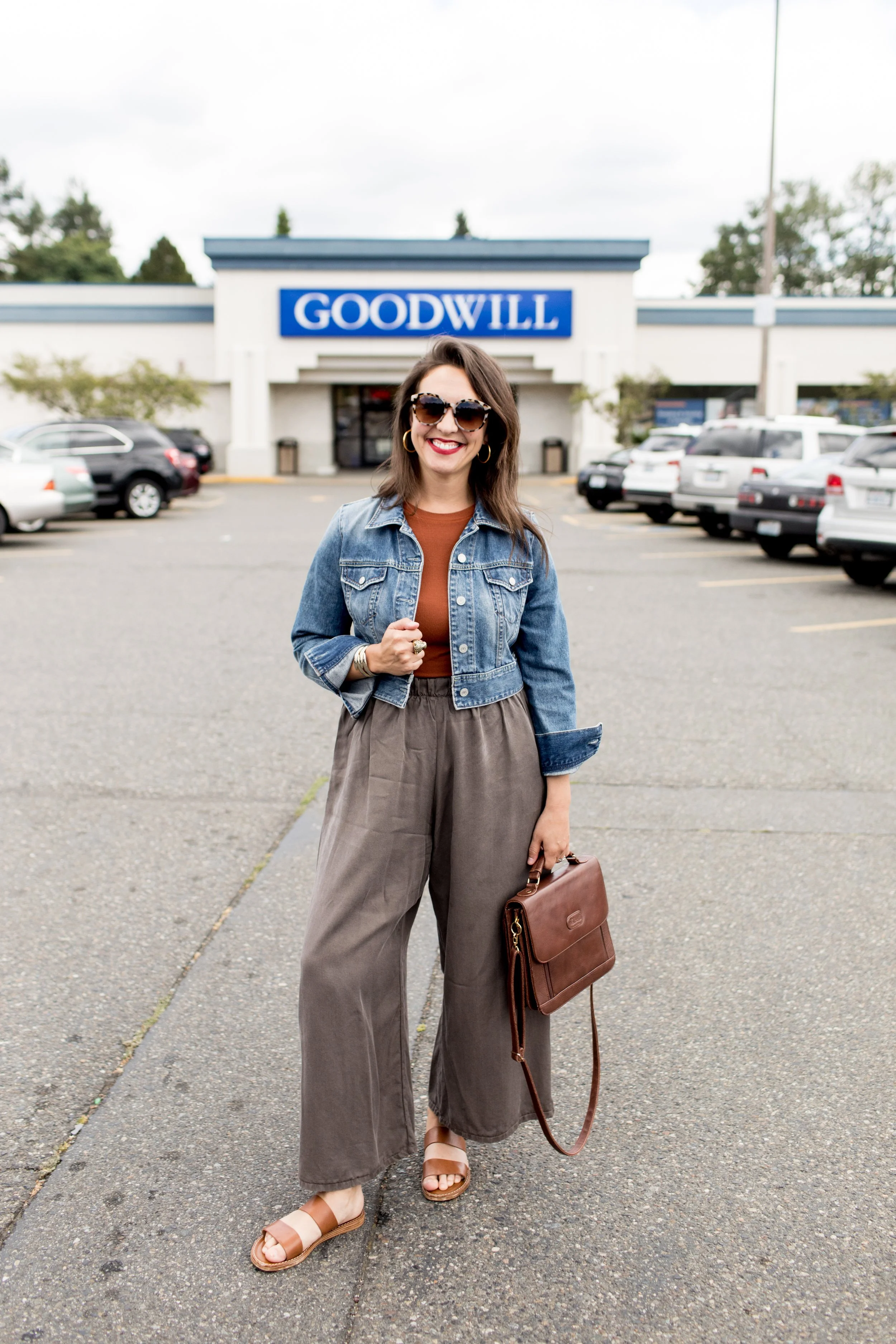
At first, I thought I was simply helping people clear out their closets and create new outfits. I quickly realized that clothing opens the door to much bigger questions. People brought their insecurities, their creativity, their relationships with their bodies, and their hopes about who they wanted to become, how they wanted to feel. We would spend time in their closets, then go shopping together, and somewhere along the way I discovered what I think of now as therapy in the moment.
Style became a way of talking about identity.
By 2019, I had transitioned into styling full-time. My business was growing, opportunities were appearing, and I was receiving more press and interviews. Then, like so many people, my world changed. The pandemic arrived, my marriage ended, and suddenly I needed stability in a way I never had before.
I returned to mental health work and spent two years in community mental health before moving back to Seattle and joining Self Space. Rachel took a chance on me and I remain deeply grateful for that.
Today, much of my work centers on identity, creativity, trauma, and the complicated experience of desire. Divorce, in particular, is such a painful and transformative season. It can be brutal, but it can also reveal parts of ourselves that have been waiting a very long time to emerge.
“I often think about desire, pleasure, and play. So many of us have learned to distrust our wants...Over time, the act of wanting itself can begin to feel dangerous.”
I often think about desire, pleasure, and play. So many of us have learned to distrust our wants. We fear disappointment. We tell ourselves not to get excited because the outcome might not be what we hoped for. Over time, the act of wanting itself can begin to feel dangerous.
In therapy, I am less interested in helping people make immediate decisions than I am in helping them experiment. What would it be like if things could be different? What if you allowed yourself to imagine something new?
These are delicate questions. They touch the most vulnerable parts of who we are. They shape our relationships, our creativity, our sense of self, and our ability to experience joy.
I love working with people at that intersection between who they have been and who they hope to become. A place with immense possibility.
Learn more about Kelly’s approach to therapy and watch this recording of a recent training led by Kelly.