Becoming a Good Ancestor
Looking back, I think I always knew I wanted to work with people. Stories and families drew me in, and they stayed with me. Growing up in what is often called the “inner city,” I knew my community was a special place, full of amazing people and real strength. That awareness showed up early. In fourth grade, I won second place in a writing contest on a social issue; I chose marriage equality because, to me, it simply made sense. In high school, my final English project was about the many stories of adoption. It encapsulated the strong pull I’ve always felt toward helping adults heal so they wouldn’t pass hard things down to the children in their lives. I didn’t know yet how to make that happen, so I assumed the path was to study psychology. It wasn’t until my last year of undergrad in my psychology program that a professor suggested social work, telling me I had a knack for seeing the world and the people in it, broadly. At first, I didn’t understand what my professor meant. Then I realized social work wasn’t a new direction for me at all. It was part of my heritage.
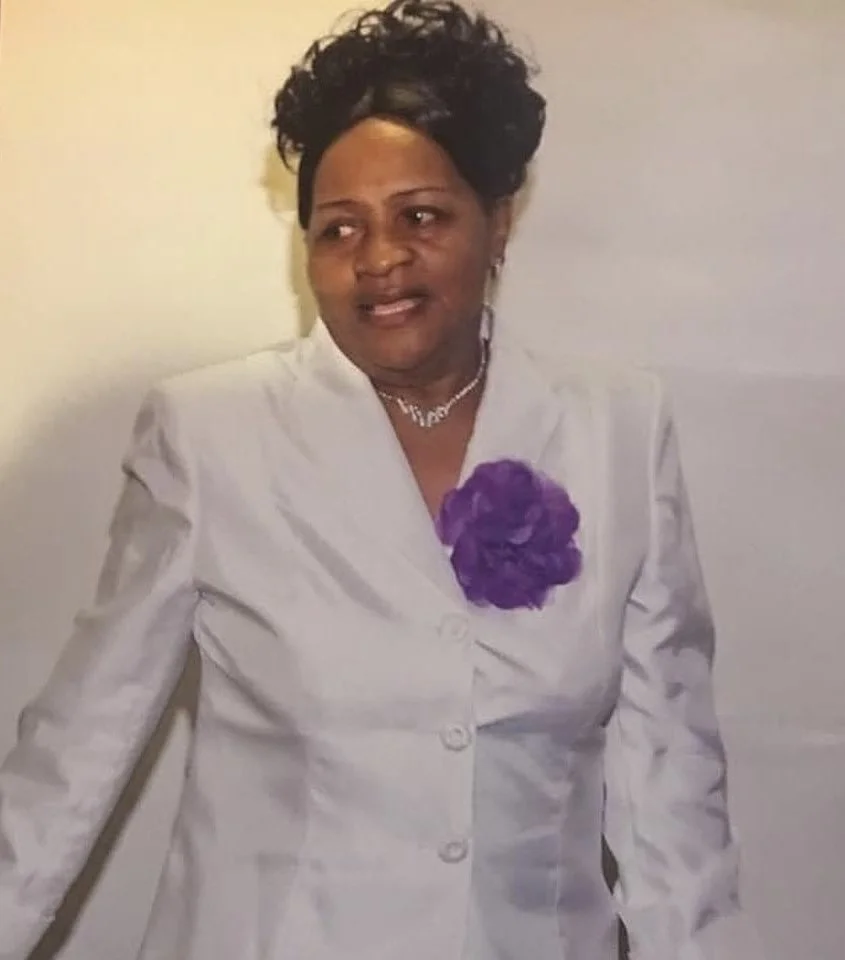
Tychelle’s Grandmother
My mom, aunt and maternal grandmother all spent their careers doing “social work” working in shelters and human services. For them, and for my family as a whole, caring for people was simply part of everyday life. Growing up, I watched them treat everyone with the same warmth and dignity. Rank didn’t matter to them; being a person did. In my culture it is an unwritten rule that anyone older than you, you call “Mister” or “Missus,” whether they are a person living in a shelter or the CEO of a company. Because of that, I learned to see everyone simply as human worthy of dignity and respect.
That’s where my belief about people began. In my eyes everybody starts with 100% kindness, dignity, and respect. We don’t start from zero and earn our way up; it only decreases when we aren’t kind or loving in how we treat each other and the world. So, I try to bring the same respect to everyone I meet, because of their innate humanity. I have always defined respect in two ways: respect in the ways that are bestowed upon those with authority and respect for everyone’s innate humanity. The second is the one I try to live by, giving value and esteem to all people. I believe that everyone should leave a room with just as much or more dignity than they entered the room with.
I bring these same beliefs and values into the therapeutic room. People often come to therapy expressing their longing to be “fixed”, I tell them I’m not here to fix them, because they don’t need to be “fixed”. I’m here to help them understand and make space for themselves. I like to imagine it as an experience of feeling lost in the woods looking to find your way back home. I’m not here to give you directions and I can’t walk for you, but I can walk alongside you while you find your footing, and I’ll even provide a lantern to help guide our path as I walk alongside you. Another thing I share with my clients is something that I have learned working with people throughout the lifespan; the longest relationship you’ll ever have is with yourself, so learning to like and deeply love yourself matters more than most people realize.
“I personally don’t believe in being “healed” as a final destination, but I deeply believe in healing.”
There is often in therapy the concept of being “healed”, I personally don’t believe in being “healed” as a final destination, but I deeply believe in healing. Another image (or as I call them, proverbs) is the scar. When you get injured, and the body heals, it often forms a scar because that wound heals differently, and years later it may still be a tender spot, especially when it’s bumped, but that doesn’t negate the healing that took place, it means that you may experience that spot or scar as tender and you may have to care for it differently. The goal is to carry forward what you need from the hard seasons without bringing all of it into the next one, living even with the scars.
With all of this therapeutic, Zen talk people sometimes ask what might surprise them about me. Honestly, I’m pretty much the same everywhere I go. I try to be the same in every room I enter; all of my friends and family will attest to that. Something recent that I did that really speaks to who I am is, I got a tattoo that I have been dreaming of for a long time, something that represents who I am and how I try to walk through the world. It's a large acacia tree on my right calf, with sprawling roots that go down to my heel. The acacia is an African tree that has come to symbolize the place where we meet our ancestors. For me, it represents my journey through this middle plane, my time here on earth, while staying connected to everyone who came before me. Those roots reach back through generations: from Africa, through chattel slavery in America, through the Great Migration, and down to my own family, including the women I was blessed to know, my great-grandmother Mary Shaw Faison and my grandmother Margery Faison. They ground me and anchor me in who I am. The roots mattered to me because I know the shoulders I stand on. I have come to live by this notion, I am both a descendant and an ancestor, and I want to be a good one. I want to engage people with love, dignity, and integrity. For me, that means showing up fully for the people in front of me, being part of their journey without trying to be the whole story and engaging their human dignity and hopefully being able to enhance it. That’s the work I am honored to do, being with people in their most vulnerable and strength building moments.